


For over 30 years Professor Nigel Dunnett has been a fabulous lecturer, researcher and author, based at Sheffield University as Professor of Planting Design and Urban Horticulture in the Department of Landscape and he was an incredible inspiration to many others within the UK and also so much internationally.
With his deep knowledge of plantsmanship and landscape design, and inspirational research on new planting schemes, he continuously developed new planting palettes and design approaches based on his strong ecological understanding of plant communities.
Professor Helen Woolley, School of Architecture and Landscape at the University of Sheffield, said, “Professor Nigel Dunnett was an extraordinary colleague, teacher and friend whose influence on landscape architecture and planting design has been profound. At the University of Sheffield, he inspired students and professionals from around the world through his unique ability to combine scientific understanding with creativity and beauty in the landscape. Indeed he truly helped to build the reputation of the University of Sheffield as a national and international leader in the field of landscape architecture.
“Nigel challenged us to think differently about planting, not simply as decoration, but as a vital tool for creating healthier, more resilient and more inspiring places. His passion, generosity and vision have left an enduring legacy, and he will be greatly missed by all who had the privilege to work with him.”
His horticultural and design accolades are manifold and we remember him fondly as the first winner of the Landscape Institute’s Award for Planting Design, Public Horticulture and Strategic Ecology (2018) and the Fellows Award for Most Outstanding Project (2018), both for The Barbican Podium landscape.
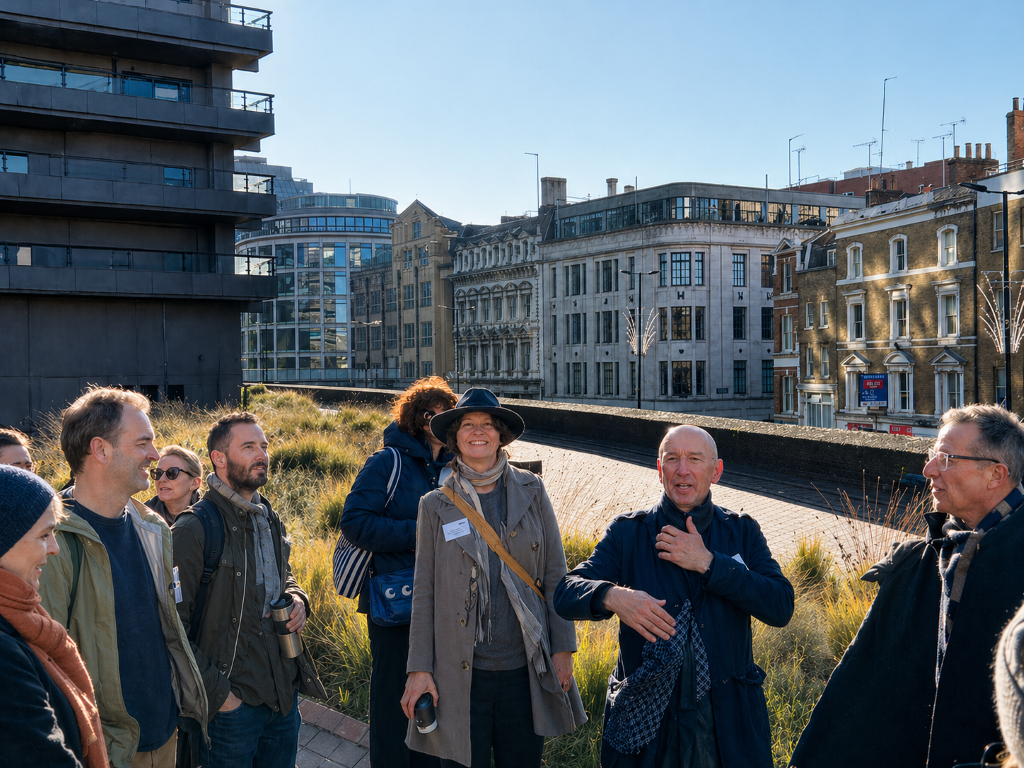
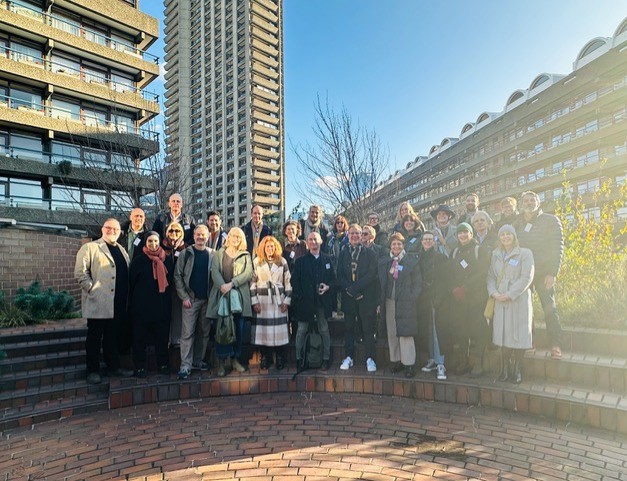
In recognition of his outstanding work and ongoing support of the Landscape Institute, Nigel was made a Fellow in 2020, only leaving the College of Fellows due to ill health last year. As a committed member, Nigel enjoyed giving his time to lead tours and share his knowledge and experience with others. His passion for plants, people and place was evident in everything he did.
Nigel’s book on ‘Naturalistic Planting Design: The Essential Guide’, published less than a decade ago, attained international acclaim and is the culmination of his work and today a popular guide to many involved with the design and management of more naturalistic planting schemes. This was followed recently by the second edition of “The Dynamic Landscape – Design, Ecology and Management of Naturalistic Urban Planting’ co-edited with James Hitchmough. Incredibly informative and hands-on, the information is invaluable to all landscape architects working with public and private urban greenspaces.
Nigel specialised early in his career on the use of annuals within the public realm. Landscape architect Brita von Schoenaich CMLI remembers that in the mid 1990s, as a young professional (then co-director of Schoenaich Rees Landscape Architects), she undertook gorilla gardening activities at London’s busy Hogarth Roundabout and used British native annual plants combined with Nigel’s emerging Pictorial Meadow mixes using many American species. The result ensured an extended flowering season from April to November and achieved great acclaim for the, at the time, unusual and long lasting flowering display at one of London’s most dreary main roads.
Nigel developed further seed mixes and perfected their performance, and today his involvement right from the start resulted in the now-called Pictorial Meadows charity, which, as a social enterprise, offers naturalistic, sustainable and designed approaches to landscape planting.
Nigel had a particular love for the California superbloom and the way it could transform desert landscapes into vast fields of colour. He often spoke about places such as Death Valley National Park and the Mojave Desert, where, after winter rains, the ground would come alive with yellow California goldfields, purple lupines and delicate white mariposa lilies.
As Professor of Planting Design and Urban Horticulture at the University of Sheffield since 1994, his influence extended far beyond the UK. He changed the way planting is understood and valued, leaving a legacy that will continue to shape landscapes for generations to come.
His influence can be seen in a number of landmark projects, including the Barbican Estate in London, Grey to Green in Sheffield, the planting of Queen Elizabeth Olympic Park, the Tower of London’s Superbloom Community Project, and most recently with the ongoing transformation of Grosvenor Square. Together, these projects demonstrate the breadth of his work, from bold public realm interventions to ecologically rich, resilient landscapes.
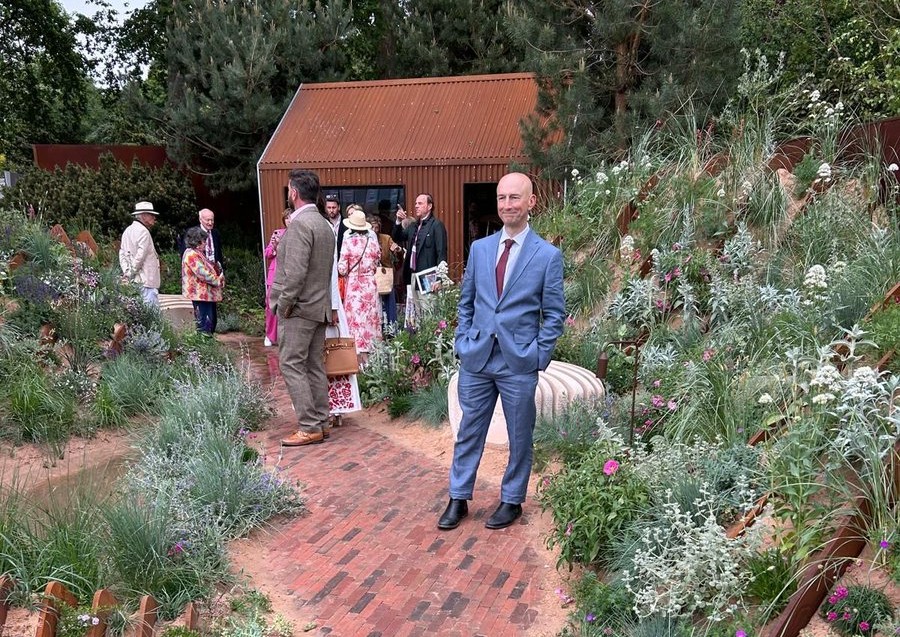
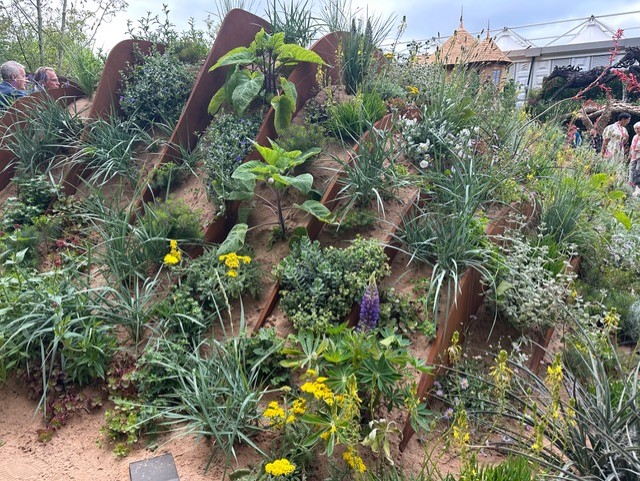
He also designed many gardens at the Chelsea Flower Show and was a celebrated Gold Medal winner. At the show gardens, he enjoyed having in-depth conversations with many passersby and charmed them with his talent as much as solid research when creating and promoting more resilient green spaces. Continuously, his eye for plant communities and design shone through.
Adam White FLI, PPLI and Convenor of the LI’s College of Fellows and close work colleague, said, “I was deeply saddened to hear of the passing of Professor Nigel Dunnett. As a Fellow of the Landscape Institute, Nigel was one of the most influential voices in planting design and urban horticulture of his generation. I had the privilege of working closely with Nigel during my time as President of the Landscape Institute, where he offered his support generously and helped shape initiatives such as the Excellence in Horticulture Award.
Professionally we later served together as founding Trustees of the Sustainable Landscape Foundation and most recently collaborated on projects including a new garden at Wimpole House for the National Trust and the redesign of Grosvenor Square in London.
“He consistently led by example, demonstrating through his work and teaching the power of planting to be both beautiful and resilient, underpinned by his widely recognised principle of ‘low input, high impact’, evident in so much of his work.”
Carolin Göhler FLI, President of the Landscape Institute, highlights, “Enthused by the central European meadow-like planting style which arrived in the UK in the early 1990s using herbaceous and woody perennials, Professor Dunnett’s early research and experimentation particularly with annual plants also drew heavily from the wild including American superbloom experiences. He brought great joy to many as well as ample food for thought and action for change away from traditional horticultural approaches and landscape architectural solutions.
“His transformational approach influenced how we design, experience and maintain our green spaces, whilst simultaneously ensuring climate resilience, even within increasingly tighter financial constraints.
“With his modest but firm demeanor he had students, fellow lecturers, clients as well as all of us working with him enthralled and created with his superb plant and landscape competency spectacular beauty, both ephemeral and lasting. As Professor in Planting Design and Urban Horticulture, through his research and books, through his presence at flower shows, and through his high-profile landscape projects, he highlighted his innovation and creativeness in transforming our urban places.”
When becoming a Fellow of the Landscape Institute in summer 2020, Nigel expressed the “vindication of his mission to take every opportunity to promote the case for creative, innovative and transformational planting” as well as his quest to support and encourage others to do the same. He did exactly that in such powerful ways.
We are immensely grateful for Nigel’s endless generosity and inspiration and all the treasured time had with him as students, landscape architects and other landscape professionals.
His passing is a significant loss to the profession, but above all to his family, and all those of us who knew him more dearly.
Professor Nigel Dunnett – Landmark Projects
The Barbican Estate, London (2015)
Led the redesign of the podium landscapes, including Beech Gardens and the High Walk, transforming a Brutalist icon into a climate-resilient oasis using drought-tolerant, steppe-style planting within a Grade II listed setting.
Grey to Green, Sheffield (2016–2020)
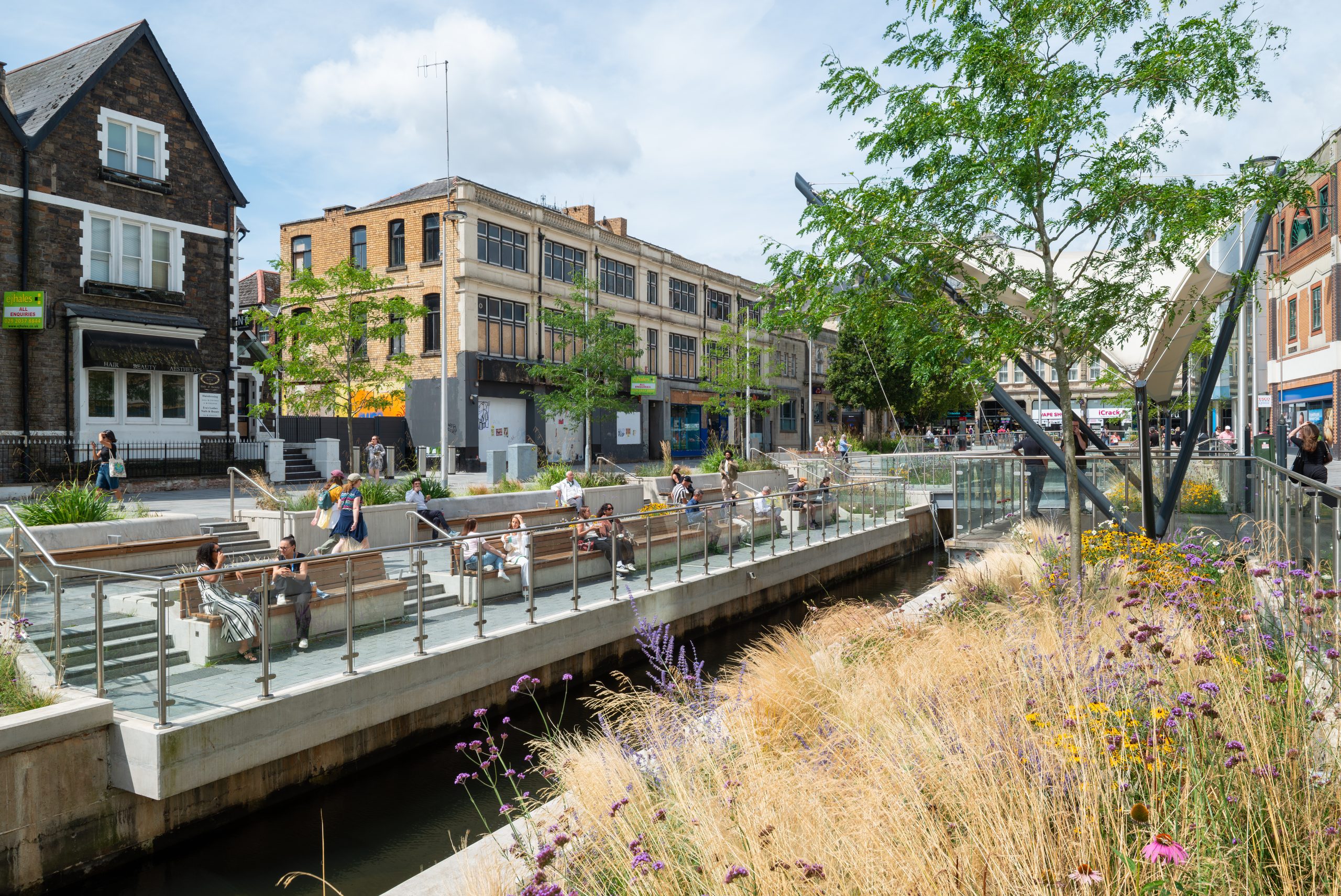
The UK’s longest green street, replacing former dual carriageways with bioswales and rain gardens. A flagship project for climate resilience, significantly improving biodiversity and reducing urban flood risk.
Queen Elizabeth Olympic Park, London (2012)
Principal planting consultant for the Olympic “Gold Meadows”, delivering large-scale pictorial meadows designed to peak in colour for the opening ceremony.
Tower of London Superbloom (2022)
Transformed the historic moat into a vibrant field of wildflowers using millions of seeds, reimagining a defensive space as an immersive and biodiverse landscape.
Grosvenor Square, London (completion 2026)
Leading the transformation of this historic square into a major urban forest, dramatically increasing planting and biodiversity and setting a new benchmark for green infrastructure in city centres.