



The Landscape Institute’s outputs to cut carbon emissions in projects
The built and natural environment accounts for approximately 25% of the UK’s total greenhouse gas emissions[1]. We believe our sector must play its part in reducing these emissions to mitigate the impacts of climate change.
In 2024, we published a new report ’Landscape and Carbon’ report in conjunction with BALI, which outlines how the landscape profession can offer solutions for carbon reduction. Building on that report’s recommendations, we’ve now developed a range of free, practical tools, guidance, and resources to support landscape and related professionals.
These outputs are designed to be easy to use, outlining cost-effective and efficient ways to reduce carbon. We encourage all landscape practitioners to use these resources in their work with other professionals, suppliers, developers, and clients to help reduce project emissions and combat global warming.
Carbon Overlay to the RIBA Plan of Work
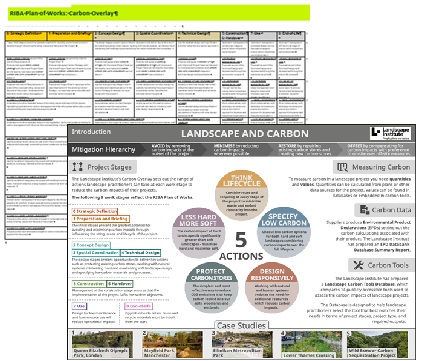
We’ve launched a new Carbon Overlay to the RIBA Plan of Work to help landscape and wider practitioners cut carbon in projects. This overlay aligns directly with the existing RIBA stages, plus an “end of use” stage to cover the vital aspects of recycling and reuse.
Landscape Carbon tools: Database and Summary Report
The Landscape Carbon Tools Database provides a searchable overview of publicly available tools that support carbon assessment in landscape projects. It enables practitioners to identify tools appropriate to different project stages, scales and landscape elements, including embodied carbon, carbon sequestration and wider ecosystem services.
A concise Summary Report highlights current use across the sector, identifies gaps, and supports more consistent and transparent approaches to carbon assessment in landscape practice.
Environmental Product Declarations (EPDs) and Product Category Rules: Overview and Factsheets
Environmental Product Declarations (EPDs) support transparent, evidence-based material selection across the built and natural environment, while Product Category Rules (PCRs) ensure consistency and credibility in environmental reporting by defining how impacts are calculated for specific product types.
These resources explain what EPDs are, why they matter, and how practitioners can use EPD data to reduce embodied carbon, as well as the role of PCRs in producing comparable carbon data and how they underpin reliable EPDs.
EPD Databank: Database and Summary Report
The EPD Databank is a comparative database showing where verified EPD data for landscape-related products can be accessed.
It supports efficient material specification and comparison, enabling practitioners to make informed low-carbon design choices. The accompanying Summary Report provides insight into current data availability and identifies opportunities to strengthen the evidence base for landscape materials.